
Tax Extension Filed? Here’s What You Still Need to Do Before the Deadline
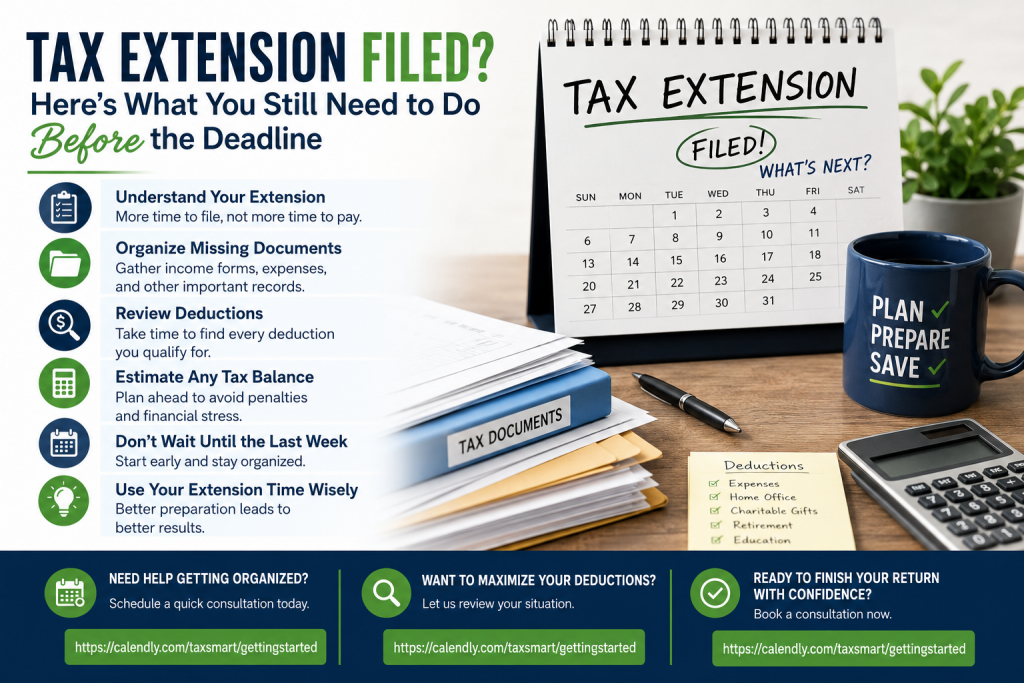
Filing a tax extension can feel like crossing the finish line, but many taxpayers are surprised to learn that filing an extension is only part of the process. An extension gives you additional time to submit your tax return, but it does not eliminate responsibilities that still need attention.
Many individuals and business owners assume that once the extension is submitted, they can simply forget about taxes until the extended due date arrives. That misunderstanding can lead to penalties, unnecessary stress, and missed opportunities to save money.
Understanding what comes next after filing an extension can help you stay organized and avoid costly mistakes.
Understand What a Tax Extension Actually Does
A tax extension gives you additional time to file your tax return paperwork. However, it does not automatically extend the time to pay taxes owed.
If you owed taxes and did not submit sufficient payment with your extension, penalties and interest may continue to accumulate.
Many taxpayers confuse “more time to file” with “more time to pay,” and that misunderstanding creates problems later.
Need help reviewing your tax situation after filing an extension? Schedule a quick consultation and make sure everything is on track.
Organize Missing Tax Documents
One of the most common reasons people file extensions is missing documentation. During extension season, taxpayers are often still waiting for:
- Business income statements
- Investment forms
- Partnership documents
- Rental income details
- Expense records
- Additional deductions information
Use your extension period productively by creating a checklist of everything still needed.
Gathering documents early prevents last-minute stress and gives you more time to identify tax-saving opportunities.
Review Potential Deductions
The extension period can actually create advantages if used wisely.
Instead of rushing a return before the deadline, use this additional time to review:
- Business expenses
- Home office deductions
- Charitable contributions
- Retirement contributions
- Education expenses
- Self-employment deductions
Many taxpayers lose money every year because they rush through the filing process.
A professional review may uncover deductions you did not realize were available.
Want to make sure you are not missing valuable deductions? Schedule a consultation today and review your tax strategy before filing.
Estimate Any Remaining Tax Balance
If you have not yet calculated potential taxes owed, this should become a priority.
Ignoring potential balances until the final deadline can create:
- Unexpected penalties
- Interest charges
- Cash flow problems
- Financial stress
Estimating taxes early gives you time to prepare financially rather than facing an unpleasant surprise later.
Avoid Waiting Until the Last Week
Many people file extensions with every intention of completing taxes early, but weeks quickly become months.
Then suddenly the extended deadline arrives.
Waiting until the final days often leads to:
- Missing information
- Filing mistakes
- Rushed decisions
- Lost deductions
- Increased anxiety
Create a simple timeline and work toward completing items gradually.
Use Extension Time Strategically
An extension should not be viewed as delaying taxes.
Instead, think of it as extra planning time.
You can use the additional months to:
- Improve record organization
- Reduce filing errors
- Identify savings opportunities
- Prepare payments
- Make informed decisions
For many taxpayers, extra preparation results in a better filing outcome.
Still unsure about your next steps after filing an extension? A short consultation can help clarify exactly what still needs attention.
Ready to finish your return confidently and avoid last-minute stress? Book a consultation today and make sure nothing gets overlooked.
Final Thoughts
Filing an extension can provide valuable breathing room, but the process does not end there. The most successful taxpayers use the extra time strategically rather than simply postponing the work.
Staying proactive now can save time, reduce stress, and potentially keep more money in your pocket.