
Tax Extension Filed? Best Practices to Make the Rest of the Tax Extension Process Smooth
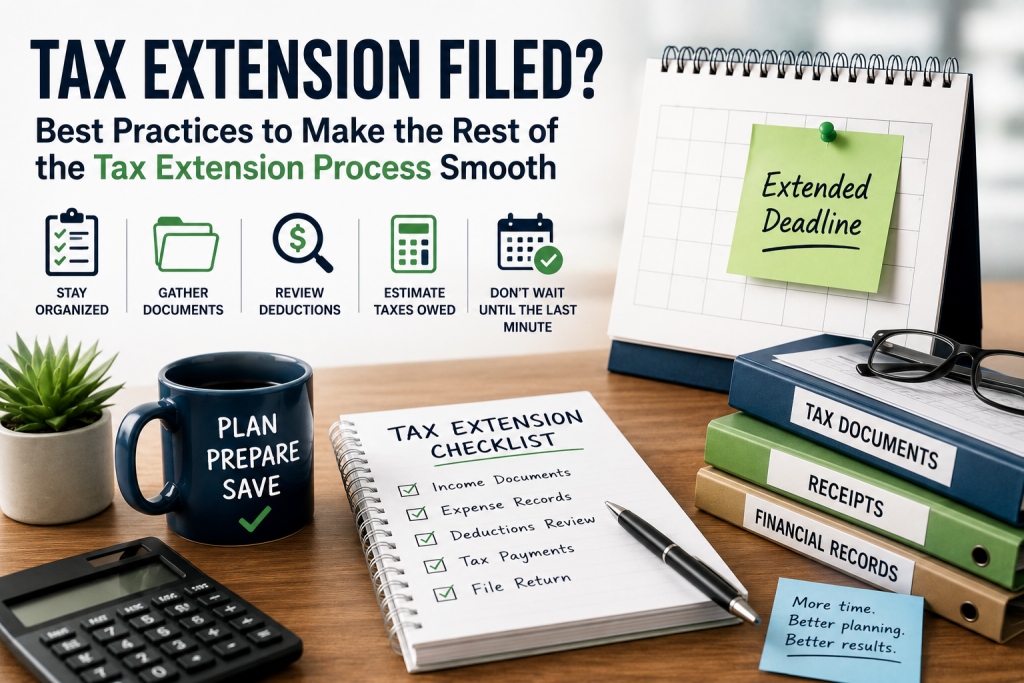
Filed a tax extension already? Learn the best practices to make your tax extension process smooth, avoid penalties, stay organized, and complete your return with confidence.
Tax season does not end after filing an extension. Many taxpayers feel relieved once the extension is submitted, but the period after filing is where proper planning can have the biggest impact.
A tax extension gives you more time to file your return, but using that extra time strategically can help reduce stress, improve accuracy, and potentially uncover additional tax savings.
If your tax extension has already been filed, here are the best practices to make the process smooth and avoid common mistakes.
1. Create a Tax Extension Checklist Immediately
One of the most effective ways to stay organized after filing an extension is to create a clear checklist.
Your checklist may include:
- Missing tax documents
- Business income statements
- Investment forms
- Expense records
- Deduction information
- Outstanding tax paperwork
Having everything listed in one place makes it easier to track progress and prevents last-minute scrambling.
Need help figuring out which documents are still missing? Schedule a consultation and receive guidance tailored to your tax situation.
2. Organize Tax Documents in One Place
One of the biggest causes of tax stress is scattered information.
Many taxpayers store tax documents across:
- Email inboxes
- Desktop folders
- Cloud drives
- Paper files
- Mobile devices
Instead, create one dedicated folder for all tax-related information.
Good organization helps:
- Reduce filing mistakes
- Save time
- Prevent missing information
- Improve accuracy
3. Review Deductions Before Final Filing
The extension period creates additional time to review opportunities that could reduce your tax liability.
Common deductions people overlook include:
- Business expenses
- Home office expenses
- Self-employment deductions
- Retirement contributions
- Education expenses
- Charitable donations
Many taxpayers discover additional savings simply because they had extra time to review their records carefully.
Wondering whether you are leaving money on the table? A tax review may uncover deductions you haven’t considered.
4. Estimate Any Remaining Tax Balance Early
A common misunderstanding is that an extension automatically delays tax payments.
In many situations, penalties and interest may continue if taxes remain unpaid.
Estimating balances early can help you:
- Avoid unexpected costs
- Plan payments better
- Reduce financial stress
- Improve cash flow planning
Planning ahead creates fewer surprises later.
5. Do Not Wait Until the Extended Deadline Approaches
Many taxpayers file an extension with good intentions and then delay action for several months.
Unfortunately, this often creates:
- Missing documents
- Filing delays
- Increased stress
- Rushed decisions
- Lost deductions
Breaking the process into smaller weekly tasks creates a much smoother experience.
Ready to complete your return accurately and avoid last-minute stress? Get professional guidance before deadlines get closer.
Frequently Asked Questions About Tax Extensions
Does filing a tax extension give more time to pay taxes?
No. A tax extension generally provides additional time to file your return, but it does not automatically extend tax payment deadlines.
What should I do after filing a tax extension?
Focus on gathering missing documents, reviewing deductions, estimating any remaining balance, and creating a timeline for completion.
Can I still reduce my taxes after filing an extension?
Potentially yes. The additional time can help identify deductions and improve the accuracy of your return.
Final Thoughts
Filing a tax extension should be viewed as an opportunity rather than a delay. Taxpayers who use the extra time strategically often experience a smoother filing process and better outcomes.
The goal is not simply filing later. The goal is filing smarter.