
What Travel Nurses Should Do After Filing a Tax Extension: Complete Guide for 2026
Introduction
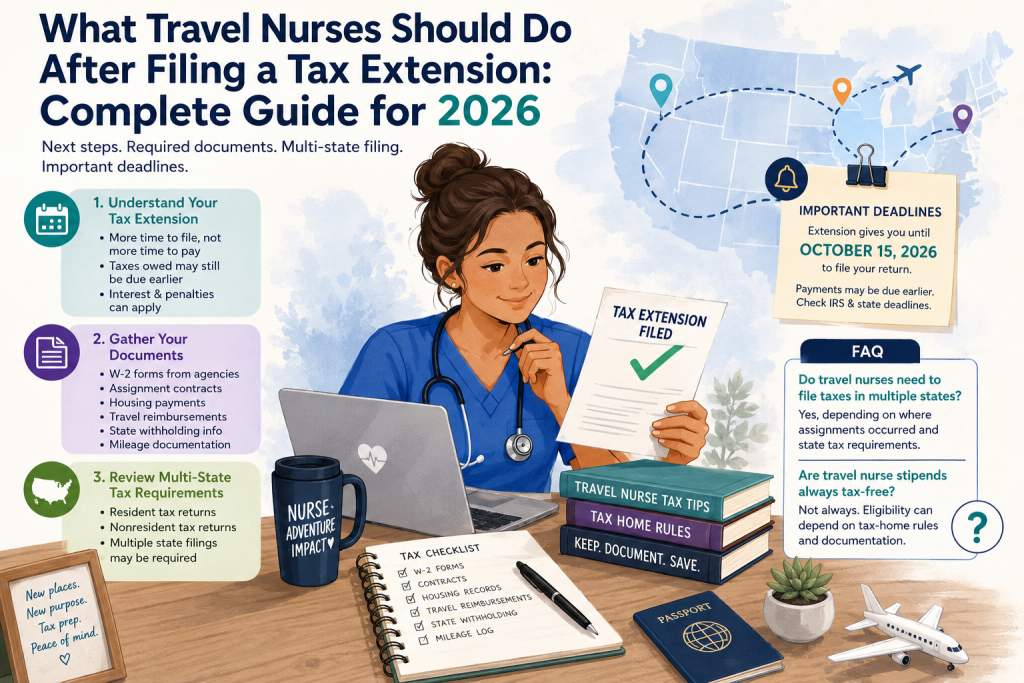
Filing a travel nurse tax extension can feel like a huge relief. Deadlines are stressful enough on their own, and when you add changing assignments, multiple states, housing stipends, reimbursements, and stacks of tax documents, it is easy to see why many travel nurses need extra time.
But filing an extension creates one of the most common misunderstandings in travel nurse taxes: many nurses believe they have postponed all tax responsibilities. They assume they can put taxes aside for several months and return to them later without consequences.
That is not how tax extensions work.
A tax extension simply gives you more time to file your paperwork. It does not automatically delay tax payments, stop interest from accumulating, or erase filing obligations. If taxes are owed and remain unpaid, penalties and interest can continue to build while you focus on contracts and patient care.
The good news is that a tax extension should not be viewed as extra time to procrastinate. Instead, it can become extra time to organize, prepare, and file a more accurate return.
For travel nurses especially, using that time strategically can reduce stress and prevent costly mistakes later.
Feeling overwhelmed by travel nurse taxes? If you filed an extension and are unsure what comes next, getting guidance early can help prevent penalties, missed documents, and state filing issues.
Schedule Your 15-Minute Consultation
Understanding What a Travel Nurse Tax Extension Actually Means
One of the biggest misconceptions surrounding a travel nurse tax extension is the idea that every deadline moves automatically.
The reality is more nuanced.
When you file an extension, you are generally receiving additional time to submit your completed tax return paperwork. You are not necessarily receiving additional time to pay taxes owed.
That distinction matters because many travel nurses have complex income structures that can create unexpected tax situations. Housing stipends, overtime, reimbursements, agency changes, and income from assignments in different states can all affect your final tax calculation.
Many travel nurses discover that they owe money because:
- Multiple states withheld taxes differently
- Income was earned from several agencies
- Tax withholding was insufficient
- Stipend treatment created confusion
- Additional income sources were overlooked
Waiting until the extended deadline to discover these issues can create unnecessary pressure.
Think of an extension as additional preparation time rather than additional delay time.
Gather Your Travel Nurse Tax Documents Before Problems Start
Once an extension has been filed, the first priority should be organization.
Travel nurses often work under conditions that make recordkeeping difficult. You may complete assignments in different cities, move housing several times, change staffing agencies, and receive multiple forms throughout the year.
Because of that, missing documents become one of the most common reasons returns are delayed.
Start by gathering all income and assignment records in one location.
This usually includes:
Income and Employment Records
- W-2 forms from staffing agencies
- Assignment contracts
- Pay statements
- Additional income documentation
Housing and Travel Records
- Housing payment information
- Travel reimbursement records
- Lodging documentation
- Temporary housing agreements
State Tax Information
- State withholding information
- Assignment dates by state
- Work location details
Expense Records
- Mileage documentation
- Travel-related expenses
- Supporting receipts where necessary
Many travel nurses wait until the final weeks before filing to begin searching for these records. That often turns into hours of digging through emails, agency portals, banking records, and text messages.
Using the extension period to organize everything early usually makes the filing process much smoother.
Multi-State Tax Rules Can Become Complicated Quickly
Travel nursing creates unique tax challenges because your work location may change several times throughout the year.
Unlike traditional employees who often work in a single state, travel nurses frequently earn income across multiple jurisdictions.
That can create situations where you may need:
- Resident tax returns
- Nonresident tax returns
- Multiple state filings
The exact requirements vary because every state approaches taxation differently.
Some states have no state income tax, while others require detailed reporting of income earned during temporary assignments. In some situations, taxes paid to one state may affect taxes owed elsewhere.
This is one of the areas where travel nurse taxes become significantly more complex than standard tax returns.
Working in multiple states this year? Multi-state returns can become complicated quickly, especially when assignments, stipends, and tax withholding vary from contract to contract. A quick review now may help prevent filing problems later.
Travel Nurse Tax Tips After Filing an Extension
The additional time after filing an extension works best when used intentionally.
Small habits often prevent larger problems later.
Maintain digital copies of every tax-related document instead of relying only on paper copies.
Track every assignment carefully, including:
- Contract dates
- Assignment locations
- Staffing agencies
- Housing arrangements
- Travel expenses
Review tax-home documentation if stipends or reimbursements are involved.
Most importantly, avoid waiting until the final filing deadline approaches.
Extensions reduce time pressure, but they work best when they create preparation time rather than last-minute panic.
Frequently Asked Questions
Do travel nurses need to file taxes in multiple states?
Yes. Depending on where assignments occurred and each state’s tax requirements, travel nurses may need both resident and nonresident returns.
Are travel nurse stipends always tax-free?
No. Eligibility for tax-free stipends often depends on tax-home requirements, documentation, and other IRS rules.
Does filing a tax extension delay taxes owed?
Not necessarily. Extensions generally provide more time to file paperwork, but taxes owed may still have separate payment deadlines.
Ready to Get Your Taxes Back on Track?
A tax extension buys time, but using that time effectively matters. Whether you need help organizing documents, reviewing state filing requirements, or preparing your return, having a clear plan can make tax season much easier.
Travel nurse taxes involve moving pieces that many traditional workers never have to deal with: multiple states, stipends, tax-home rules, extensions, and changing assignments.
If you want personalized guidance tailored to your situation, schedule a consultation with our team.
Schedule Your 15-Minute Consultation Today
Final Thoughts
A travel nurse tax extension is not simply extra time on a calendar. It is an opportunity to organize documents, review filing obligations, and prepare a more accurate return.
Travel nurse taxes naturally involve moving pieces that many traditional workers never encounter. Taking a proactive approach during the extension period can reduce stress, minimize mistakes, and help ensure that tax season feels manageable instead of overwhelming.
Using the extra time effectively today can save significant headaches tomorrow.